He noted that Egypt lost approximately EGP 110 billion in Suez Canal revenues and allocated an additional EGP 150 billion in support for the energy sector.

Minister of Finance, Ahmed Kouchouk, revealed that Egypt achieved a record-high primary surplus of EGP 435 billion, equivalent to 2.5% of GDP, despite the decline in revenues from the Suez Canal and the petroleum sector, during his presentation of the draft state budget for FY2025/2026 before the House of Representatives.
He noted that Egypt lost approximately EGP 110 billion in Suez Canal revenues and allocated an additional EGP 150 billion in support for the energy sector.
From July to March, public revenues grew by 32 %, outpacing the 24 % growth in expenditures.
Tax revenues reached a historic high of EGP 1.4 trillion, representing 38 % year-on-year growth, achieved without introducing any new taxes.
The ratio of expenditures to GDP remained consistent with the same period last fiscal year, while the overall budget deficit narrowed to 6.3 % of GDP.
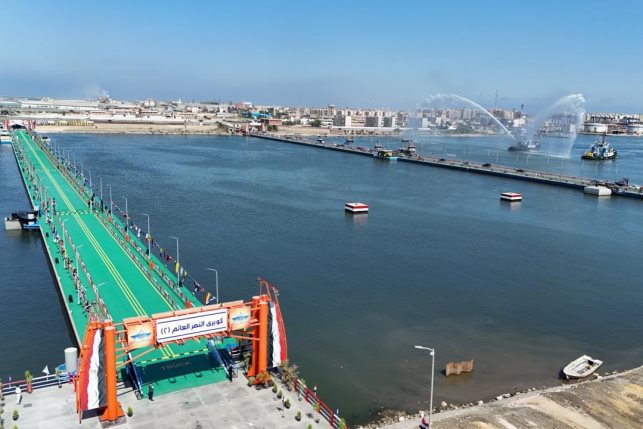
Kouchouk added that since February, 166 ships have rerouted back to the Suez Canal instead of sailing around the Cape of Good Hope, signaling renewed global confidence in Egypt’s strategic trade route.
He also reported that net international reserves reached $47.7 billion, and inflation dropped sharply from 33.3 % in March 2024 to 13.6 % in March 2025.
Private sector investment made up 59 % of total investments in the first half of the fiscal year, with an impressive annual growth rate of 80 %.
Key sectors also witnessed solid growth: tourism grew by 13.1 %, non-oil manufacturing by 12.4 %, and ICT by 15.1 %.
In terms of social spending, average expenditure on healthcare rose by 27 %, while education spending increased by 23 % during the same nine-month period.
Additionally, EGP 95 billion was spent on food subsidies, marking 37 % growth, while the Takaful and Karama social welfare program received EGP 30 billion, an increase of 24 %.
The government also allocated EGP 11 billion for state-funded medical treatments (up 35 %), EGP 8 billion to support industrial production (up 128 %), and EGP 7 billion to stimulate exports (up 78 %).
Kouchouk concluded by noting that Egypt’s external debt related to the budget decreased by $1 billion over the past eight months. Renewed foreign investor confidence has also helped extend the average debt maturity to 1.8 years as of December 2024.