The Central Bank of Egypt (CBE) has released its Monetary Policy Report for the second quarter of 2025, highlighting a cooling inflation environment, steady economic growth, and signs of strengthening in the country’s external position.

The Central Bank of Egypt (CBE) has released its Monetary Policy Report for the second quarter of 2025, highlighting a cooling inflation environment, steady economic growth, and signs of strengthening in the country’s external position.
According to the report, annual headline inflation reached its lowest quarterly average since 2022, driven by improved exchange rate stability and declining sovereign risk.
Economic activity remained resilient, with GDP growth holding at 4.8% for the second consecutive quarter, supported by solid performances in non-oil manufacturing and tourism.
The CBE also pointed to a partial recovery in Suez Canal activity and a sharp narrowing of the current account deficit as signs of improving macroeconomic fundamentals.
While the easing cycle has paused, the central bank noted that monetary policy remains supportive of disinflation. However, it signaled a cautious outlook moving forward, citing potential risks from persistent service price pressures, uncertain trade policies, and the possibility of renewed geopolitical tensions.
The report comes less than three weeks ahead of the CBE’s next policy meeting, setting the tone for how the bank may navigate the balance between supporting growth and containing inflation in the months ahead.
Headline inflation averaged 15.2% in Q2 2025, the lowest level recorded since Q3 2022. This moderation was supported by improved exchange rate dynamics and a decline in sovereign risk levels, particularly toward the end of the quarter. June’s annual headline urban inflation came in at 14.9%, down from 16.8% in May — breaking a three-month streak of rising prices.

The CBE now expects inflation to remain around its current levels through the rest of the year before beginning a gradual decline in 2026. Updated projections show inflation averaging between 15–16% for 2025 — slightly above the 14–15% forecast in the previous quarter — and between 11–12% for 2026, a slight revision from 10–12.5%. These updated figures remain significantly below the 28.3% average inflation rate recorded in 2024.
Still, the bank warned that its inflation outlook is vulnerable to several risks, including “price stickiness of services and retail items,” as well as broader uncertainties such as global trade tensions and the potential re-escalation of geopolitical conflicts. A sustained normalization of trade and easing of geopolitical pressure, however, could help strengthen Egypt’s disinflation trajectory.
Economy sees steady growth
Egypt’s economy maintained steady momentum in the second quarter, with GDP growth reaching 4.8%, the same pace as in Q1. The CBE cited robust output in non-petroleum manufacturing and tourism as primary drivers of this stability. Looking ahead, real GDP is expected to grow at an average of 4.8% in the current fiscal year, rising to 5.1% in FY 2026-2027, supported by growth in manufacturing, services, and extractive industries.
The report noted that Egypt’s negative output gap, the difference between actual and potential GDP, is expected to close by the end of the fiscal year. Although this could result in some demand-driven inflationary pressures, the CBE believes its current monetary policy stance will keep those in check. However, if economic activity exceeds current projections, the central bank may need to adopt a more cautious approach to any further monetary easing.

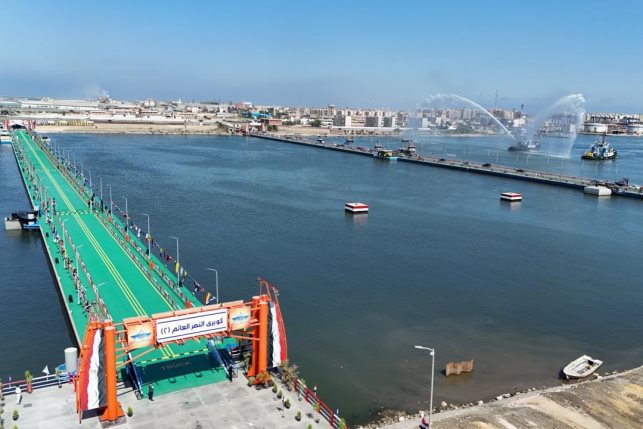
Activity in the Suez Canal, a key contributor to Egypt’s external revenues, remained under pressure due to disruptions in Red Sea shipping routes. Canal revenues fell 54.1% year-on-year to USD 2.6 billion during the first nine months of the past fiscal year. Net tonnage dropped 61.9%, while vessel transits fell 44.8% over the same period.
Still, the CBE expressed optimism for a partial recovery in the second half of the year, assuming a gradual de-escalation of geopolitical tensions in the region. Such a development would support a rebound in maritime transport through the canal, helping to boost economic performance further.
Stronger External Position and Banking Sector Trends
Egypt’s external balances improved markedly in Q2, with the current account deficit narrowing by over 50% compared to the same quarter last year. The improvement was driven by a rise in remittances, higher net services receipts, and a smaller non-oil trade deficit.
Money supply growth also decelerated during the quarter. M2 (broad money) growth slowed to 24.8%, compared to 30.6% in Q1. Meanwhile, local currency lending to the private sector continued to expand, with real growth reaching 12.6%, up from 10.1% the previous quarter. Net foreign assets held by Egypt’s banking sector rose to USD 14.94 billion in June.