This growth reflects a surge across all key components of the sector, including Islamic banks' assets, sukuk issuances, and other Sharia-compliant financial products.
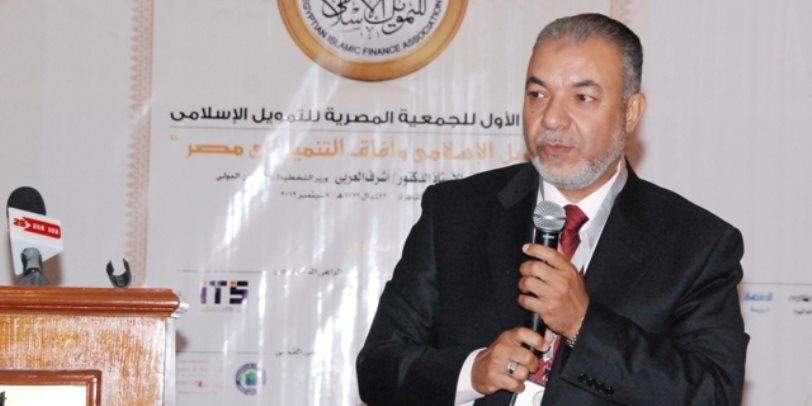
Egypt’s Islamic finance sector has recorded remarkable expansion, with its total market size reaching EGP 1.303 trillion as of June 2025 - an impressive 51% increase over the previous year, revealed Mohamed El-Beltagy, Chairperson of the Egyptian Islamic Finance Association, in the association’s latest report.
This growth reflects a surge across all key components of the sector, including Islamic banks' assets, sukuk issuances, and other Sharia-compliant financial products.
According to the report, Islamic banks’ assets stood at EGP 1.113 trillion by mid-2025, up by EGP 375 billion year-on-year. This accounts for 5.2% of total assets in Egypt’s banking system.
Sukuk issuances have also expanded, with a total value of EGP 157 billion, reinforcing the sector’s position as a significant player in alternative financing.
Deposits in Islamic banking reached EGP 810 billion, marking a 45% annual growth, and now represent 7.3% of total banking deposits in Egypt. Meanwhile, Islamic financing climbed to EGP 881 billion, up 46% year-on-year, constituting 6% of the total bank financing market.
Currently, 15 banks are licensed by the Central Bank of Egypt to provide Islamic banking services. These include four fully Sharia-compliant banks—Faisal Islamic Bank, Al Baraka Bank, Abu Dhabi Islamic Bank (ADIB), and Kuwait Finance House—as well as 11 conventional banks that offer Islamic products through dedicated branches.
The number of Islamic banking branches has grown to 322, up from 265 branches in 2024. These serve approximately 4 million customers, with many conventional banks now offering Islamic financial products across all their locations.
ADIB continues to dominate the Islamic banking landscape in Egypt, with a business volume of EGP 296 billion, giving it a 26.6% market share. This represents a 42% increase from the previous year.
Trailing closely is Faisal Islamic Bank of Egypt, with EGP 248 billion in business volume (22.3% share), followed by Banque Misr’s Islamic branches, which manage EGP 224 billion, equivalent to a 20.1% market share.
Other notable players include Kuwait Finance House with EGP 153 billion (13.8%) and Al Baraka Bank Egypt with EGP 136 billion (12.2%).
El-Beltagy highlighted the sector’s efforts to expand its offerings, noting that over 65 Sharia-compliant financial products are now available in Egypt. These span savings, financing, and investment services. However, he acknowledged the need for continued innovation, especially to meet the needs of individuals, SMEs, and public sector entities.
The sector’s global size reached approximately $4.8 trillion as of June 2025 and is projected to grow to $6.6 trillion by 2027. Worldwide, there are now 1,871 Islamic financial institutions operating under Sharia principles, underscoring the sector’s growing international relevance.