El-Khatib stressed that the government is working to restore strong FDI inflows following recent economic challenges.

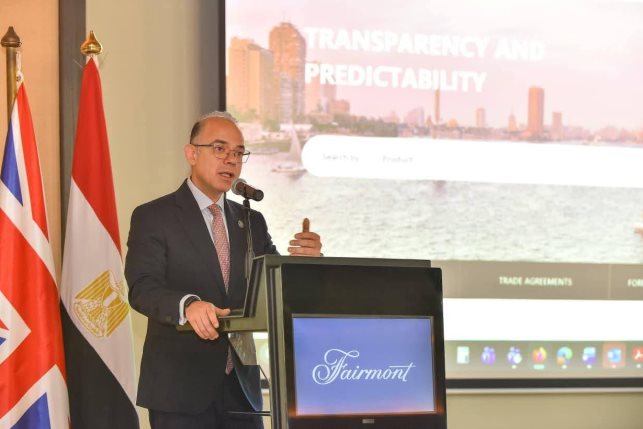
Minister of Investment and Foreign Trade, Hassan El-Khatib, conducted an interview with Bloomberg, during which he outlined the government’s efforts to boost foreign direct investment (FDI) and drive sustainable economic growth.
El-Khatib stressed that the government is working to restore strong FDI inflows following recent economic challenges.
He highlighted a major investment deal recently concluded with Qatar, along with several significant agreements announced in recent weeks.
He also pointed to last year’s landmark Ras El-Hekma deal as a model for large-scale partnerships that have attracted substantial foreign capital.
The minister noted that the government’s current priority is to capitalize on the massive infrastructure investments completed over the past decade.
He emphasized that ongoing political, fiscal, and trade reforms, implemented over more than a year, are essential to unlocking investment, particularly as investors seek predictable, long-term policy frameworks.
El-Khatib explained that the development of the Ras El-Hekma area with the UAE has already entered its first sales phase.
The project spans 173 million square meters, is designed to house around two million residents, and will include a private airport, an industrial zone, and advanced educational facilities.
He added that the government is restructuring the management of state assets through the Egypt Sovereign Wealth Fund (TSFE) and a newly established asset management unit.
The sovereign fund is tasked with managing strategic assets that the state intends to retain and enhance, while the new unit is responsible for evaluating state-owned companies to determine whether they will be transferred to the fund or prepared for privatization.
The minister also highlighted Egypt’s growing ability to attract mobile phone manufacturing and electric vehicle investment, thanks to its strategic location that links Europe, Africa, and the Middle East, combined with competitive labor costs and a fully developed infrastructure base.
He pointed to major achievements over the past decade, including the establishment of new cities, the expansion of the national road network, upgrades to public transportation systems, and the development of a high-speed rail project connecting the Red Sea to the Mediterranean.
El-Khatib acknowledged that Red Sea disruptions and the rerouting of ships away from the Suez Canal have negatively affected canal revenues.
However, he noted that government reforms have helped offset much of the impact. Remittances from Egyptians abroad have increased, foreign reserves have risen, inflation has declined, and tax revenues have improved.
He concluded by emphasizing that Egypt’s trade policies and efforts to reduce customs time and costs aim to strengthen the balance of payments.
The government expects the trade deficit to fall to its lowest level since 2010 by the end of this year.