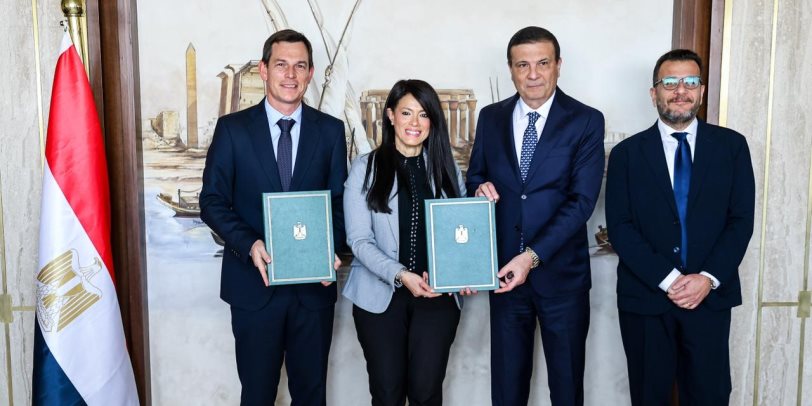
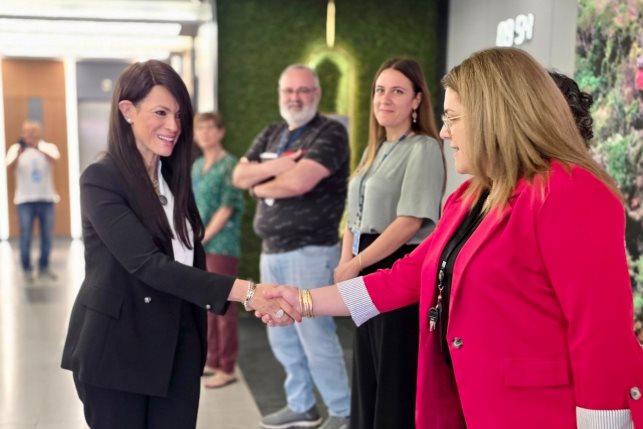
Egypt’s Ministry of Planning, Economic Development, and International Cooperation has signed a Memorandum of Understanding (MoU) with Schneider Electric Egypt, marking a major step in private sector engagement to advance climate action and enhance food security.
The agreement falls under the Country Platform for Green Projects, the NWFE Program (Nexus on Water, Food, and Energy), and will be implemented from 2026 to 2029.
The MoU was signed by Rania Al-Mashat, Minister of Planning, Economic Development, and International Cooperation, alongside Sebastian Riez, CEO of Schneider Electric for North East Africa and the Levant.
The ceremony was attended by Alaa Farouk, Minister of Agriculture and Land Reclamation, and Vrej Jijyan, representing the International Fund for Agricultural Development (IFAD).
Under the agreement, Schneider Electric will collaborate with relevant authorities to deliver integrated solutions for climate-resilient agriculture, leveraging advanced technologies in solar energy and the Internet of Things (IoT).
The initiative aims to accelerate climate action, improve smallholder farmers’ resilience, and support sustainable water, food, and energy management in line with the "Climate Resilient Water Resources Management in the Nile Valley (CROWN)" project.
Al-Mashat emphasized that the MoU highlights the State’s commitment to strengthening partnerships with the private sector and international institutions.
“These efforts support sustainable rural development, enhance food security, and increase the adaptive capacity of small farmers. Agriculture is a key sector for Egypt’s economic model, with plans to raise its contribution to GDP to 17% by 2030,” she said.
Minister Alaa Farouk underscored the government’s focus on empowering small farmers through private sector collaboration, in line with President Abdel Fattah El-Sisi’s directives to boost agricultural productivity and resilience.
For Schneider Electric, the partnership reflects a strategic push to integrate technology and innovation into Egypt’s green transition. “We are proud to contribute to sustainable development by enabling smarter energy management and clean electricity solutions that deliver social and economic value,” said CEO Sebastian Riez.
IFAD Country Director, Vrej Jijyan, described the MoU as a “qualitative shift” in food security efforts, highlighting the role of modern technology in enhancing agricultural outcomes and driving sector-wide impact.
The agreement builds on Schneider Electric’s previous initiatives in Egypt, which have applied sustainability solutions to improve resource efficiency and support local communities, aligning with national development priorities in water, energy, and food security.