Madbouly reaffirmed the government’s full commitment to continuing economic reform, strengthening international partnerships, and building a more competitive, sustainable, and inclusive economy.

Prime Minister Mostafa Madbouly said that the Egyptian state is continuing its efforts to build a more competitive and attractive business environment for both local and foreign private investment, stressing that economic reform and international partnerships remain key pillars of the country’s development strategy.
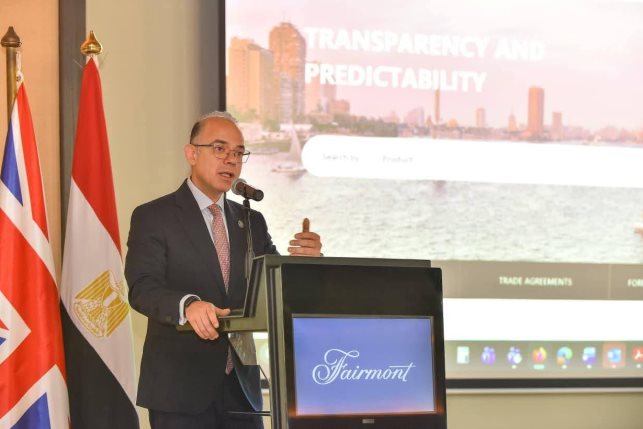
Speaking during the high-level closing conference of the first phase of the Egypt–OECD Country Programme held in the New Administrative Capital, Madbouly reaffirmed the government’s full commitment to continuing economic reform, strengthening international partnerships, and building a more competitive, sustainable, and inclusive economy.
He emphasized that the Egyptian citizen remains at the center of these efforts and their primary beneficiary, noting that this aligns with the OECD’s motto: “Better policies for better lives.”
Madbouly described the programme as an important milestone in the growing cooperation between Egypt and the OECD, which began five years ago and has since supported the implementation of numerous development projects across key sectors.
He noted that despite increasing global and regional challenges, Egypt has implemented a comprehensive economic reform programme supported by strategic international partnerships aimed at enhancing macroeconomic stability, resilience, and sustainable growth.
He added that the OECD Country Programme represents one of the key instruments supporting these efforts.
The Prime Minister highlighted that the programme delivered tangible results in strengthening institutional capacity, promoting evidence-based policymaking, improving the investment climate, and upgrading legislative and regulatory frameworks in line with international standards.
He said the programme was implemented in cooperation with around 20 national entities, reflecting an integrated and participatory approach across state institutions.
Madbouly explained that the programme covered five main pillars and around 35 projects, spanning inclusive growth, innovation, digital transformation, governance, and sustainable development, all aligned with Egypt’s national development priorities.
He also noted that the programme contributed to expanding Egypt’s participation in OECD committees, strengthening knowledge exchange and enhancing Egypt’s role in international policymaking.
The Prime Minister said the initiative supported key structural reform areas, including SMEs, innovation, productivity, digital policies, statistical system modernization, green economy transition, and clean energy development, including low-carbon hydrogen.
Madbouly stressed that Egypt is continuing to build a more competitive investment environment to attract private sector investment, describing the private sector as a fundamental driver of sustainable growth and job creation.
He added that the programme contributed to advancing sectoral strategies in financial inclusion, entrepreneurship, digital transformation, and private sector empowerment, while linking these areas to broader structural reforms to ensure more inclusive and sustainable growth.
The Prime Minister also highlighted Egypt’s role in regional and international development initiatives, noting that Egypt will co-chair the OECD Middle East and North Africa Governance and Competitiveness Initiative for the period 2026–2030, alongside Italy and Turkey.
He said this reflects international confidence in Egypt’s development experience and strengthens its role in promoting regional integration and economic stability.
Madbouly announced the launch of a set of new OECD reports covering business dynamics, innovation policy, infrastructure investment, women’s economic empowerment, and public budget reform, describing them as important contributions to Egypt’s reform agenda.
He confirmed that Egypt will continue its cooperation with the OECD through national, regional, and international frameworks, including ongoing work to support governance reforms in 2026, and continued engagement in OECD committees to exchange expertise and contribute to global policy formulation.
Madbouly concluded by reiterating the government’s commitment to economic reform and international cooperation, expressing confidence that the partnership with the OECD marks the beginning of a new phase that will further strengthen development efforts and support future generations.