The World Bank Group approved a new $1 billion financing package for Egypt aimed at boosting private sector-led job creation, strengthening macroeconomic stability, and accelerating the country’s transition toward a greener economy.
The package includes a $200 million credit guarantee provided by the United Kingdom government, reflecting continued international backing for Egypt’s reform agenda amid ongoing regional and global economic pressures.
The financing comes as Egypt continues implementing economic reforms following two years of successive external shocks and renewed uncertainty linked to tensions in the Middle East.
According to the World Bank, reforms including exchange-rate unification, tighter fiscal discipline, and improvements in tax policy and administration have helped rebuild external buffers, ease inflationary pressures, improve investor confidence, and gradually support economic recovery.
The operation, titled “Generating Resilience, Opportunities, and Welfare for a Thriving Egypt II (GROWTH II)”, is designed to support policies that encourage job creation, improve the sustainability of public finances, and advance environmentally sustainable growth.
Stéphane Guimbert, the World Bank’s division director for Egypt, Yemen, and Djibouti, said Egypt is pursuing an “ambitious reform agenda” aimed at unlocking private investment, generating jobs, and protecting vulnerable households despite challenging regional and global conditions.
He added that the financing would support efforts to build a “more competitive, resilient and sustainable economy” capable of withstanding future shocks.
Samar Al Ahdal, Egypt’s deputy minister of foreign affairs for international cooperation, said the financing reflects the strong partnership between Egypt, the World Bank Group, and the United Kingdom, adding that the reforms supported under the programme are expected to create better jobs, protect vulnerable groups, and promote inclusive growth.
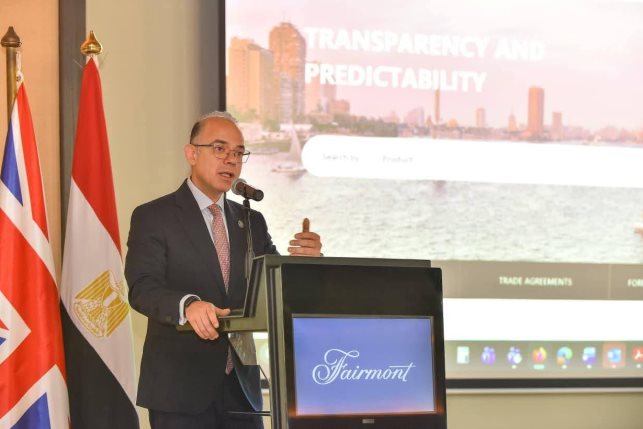
UK Ambassador to Egypt Mark Bryson-Richardson said the UK is proud to support Egypt’s reform programme through the guarantee agreement in partnership with the World Bank Group.
The programme supports reforms targeting stronger governance of state-owned enterprises, reduced barriers to private investment, and the enforcement of fair competition rules.
It also includes measures aimed at improving domestic revenue mobilisation, enhancing the efficiency of domestic debt markets, and lowering government borrowing costs.
On the social front, the programme seeks to expand protection for vulnerable households by automatically enrolling beneficiaries of the Takaful and Karama programme into Egypt’s Universal Health Insurance System.
The financing package also backs Egypt’s green transition through measures to improve greenhouse gas emissions monitoring, develop carbon credit markets, support demand-driven clean energy investments, and strengthen the financial sustainability of the electricity and water sectors.
The World Bank said the package represents the second operation in a three-part concessional financing programme offered on terms more favourable than market rates.
The programme is aligned with broader international support for Egypt’s reform agenda, including cooperation with the International Monetary Fund and the European Union, while the Asian Infrastructure Investment Bank is expected to provide parallel financing.
The financing is also consistent with the World Bank Group’s Country Partnership Framework for Egypt for 2023–2027, which focuses on supporting green, resilient, and inclusive development through stronger private sector participation, improved human capital outcomes, and greater resilience to economic shocks.