Egypt unveils industrial strategy focused on global supply chains, technology, and green manufacturing.
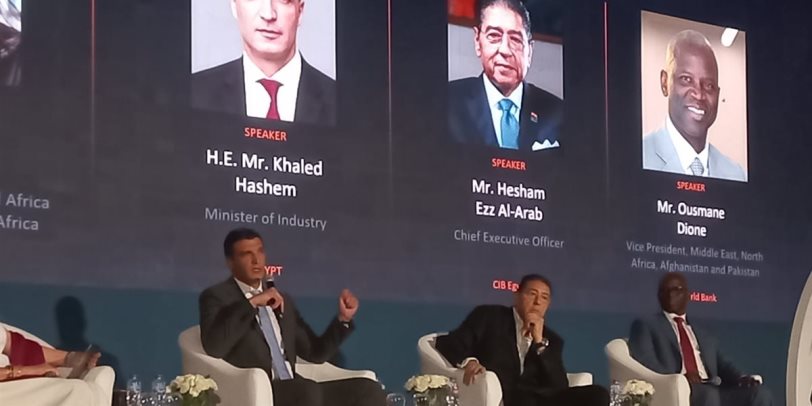 Khaled Hashem speaks during an IFC event marking 50 years of partnership with Egypt.
Egypt says its new industrial vision focuses on technology transfer, advanced manufacturing, SMEs, and green industries as the country seeks stronger integration into global value and supply chains.
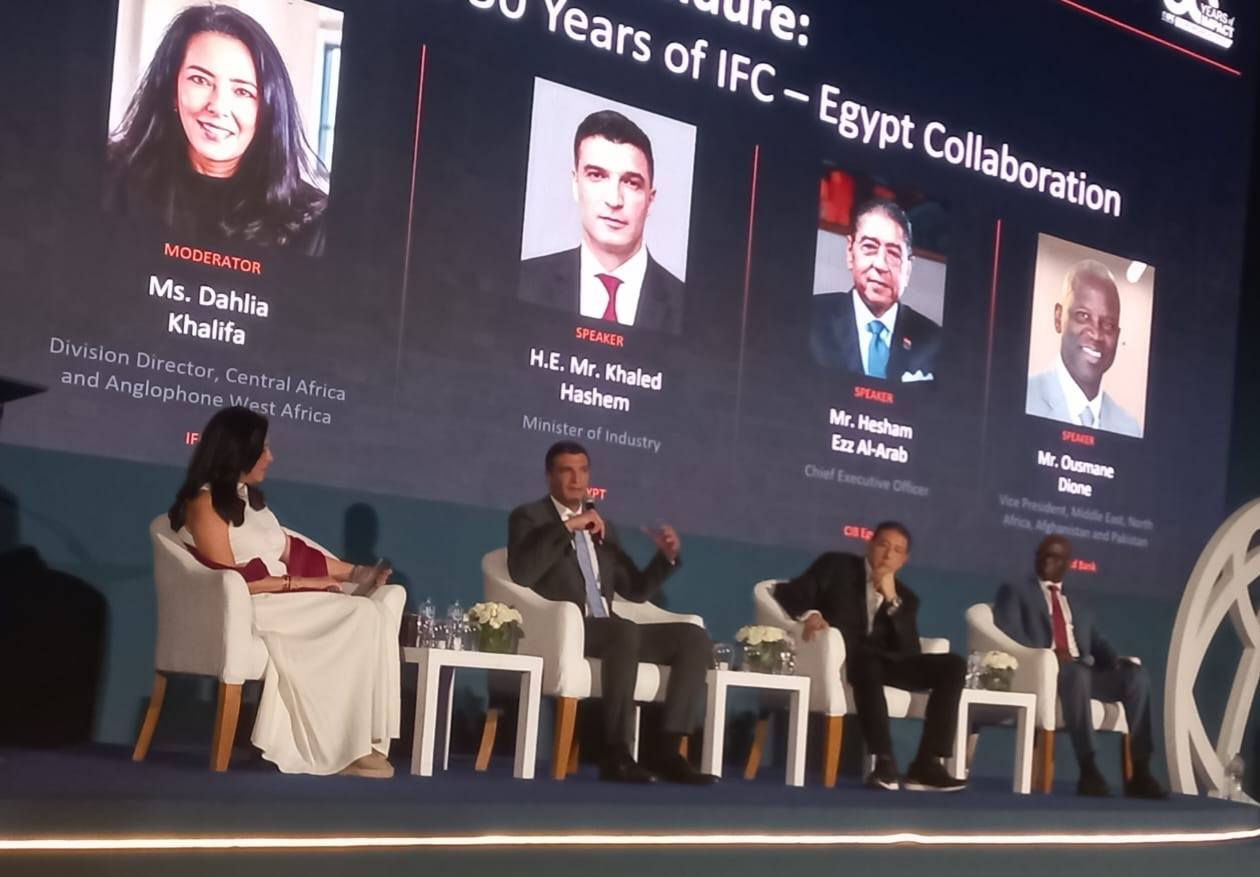
Egypt’s Minister of Industry Khaled Hashem said the government is implementing a new industrial vision aimed at integrating Egyptian industry more deeply into global value and supply chains while enhancing the international competitiveness of the country’s manufacturing sector.
The remarks came during a panel discussion marking 50 years of partnership between Egypt and the International Finance Corporation (IFC), attended by ministers, senior officials, international financial institutions, and private sector representatives.
“Egypt aims to move beyond a traditional import substitution model toward deeper integration with the global economy and international production networks.”
— Industry Minister Khaled Hashem
Hashem revealed that the Ministry of Industry has recently finalized an updated industrial strategy targeting several priority sectors based on scientific and economic criteria.
According to the minister, the strategy focuses not only on attracting capital inflows, but also on securing investments linked to technology transfer, industrial expertise, innovation, and advanced manufacturing capabilities.
He explained that Egypt aims to move beyond a traditional import substitution model toward deeper integration with the global economy and international production networks.
The strategy seeks to strengthen Egypt’s position as a regional industrial hub capable of accessing international markets and competing globally.
Hashem stressed that small and medium-sized enterprises represent one of the core pillars of Egypt’s industrial strategy, describing SMEs as the foundation for building a sustainable and resilient industrial base.
He said the ministry is working to create a more supportive industrial environment for smaller businesses by simplifying procedures and expanding industrial services through digital transformation initiatives focused on solving investor challenges.
The minister also highlighted human capital development as a major priority during the coming phase.
Egypt plans to improve technical education quality and expand vocational training programs.
The strategy aims to align educational outcomes with industrial and labor market needs.
Authorities are expanding digital transformation initiatives to improve industrial services.
Small and medium-sized enterprises are viewed as a cornerstone of long-term industrial growth.
On green transformation, Hashem said Egypt possesses strong potential to become a regional hub for low-emission industries amid growing international demand for decarbonization and green manufacturing standards.
He emphasized the importance of integrating renewable energy, energy efficiency systems, and clean technologies across industrial activities.
The minister added that Egypt aims over the coming years to become one of the countries most integrated into global value chains within targeted industrial sectors while strengthening the image of Egyptian products as globally competitive, high-quality goods.
Hashem concluded by stressing that empowering the private sector remains the cornerstone of industrial growth and economic transformation, while technology, innovation, artificial intelligence, and linking scientific research with industrial application will define the future of Egyptian industry.
Egypt’s updated industrial strategy reflects a broader shift toward export-oriented manufacturing, technological modernization, and stronger integration into international production networks.
Officials say the coming phase will focus on combining industrial competitiveness, sustainability, innovation, and private sector participation to position Egypt as a leading regional industrial and manufacturing hub.